Flat Roof Repair
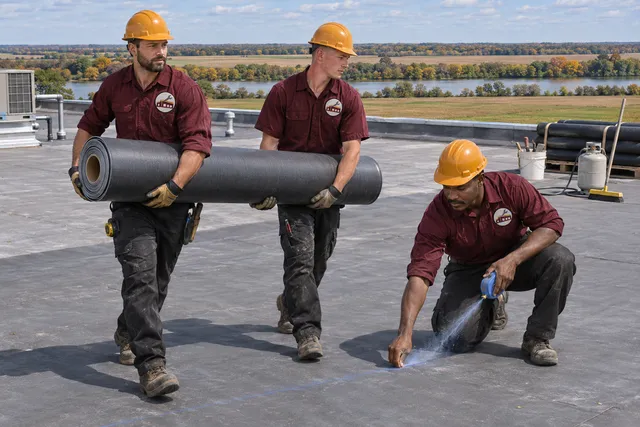
Low-slope roofs with TPO, EPDM, PVC, or modified bitumen membrane
Rewelded laps, cut-out blisters, patched punctures, reflashed drains
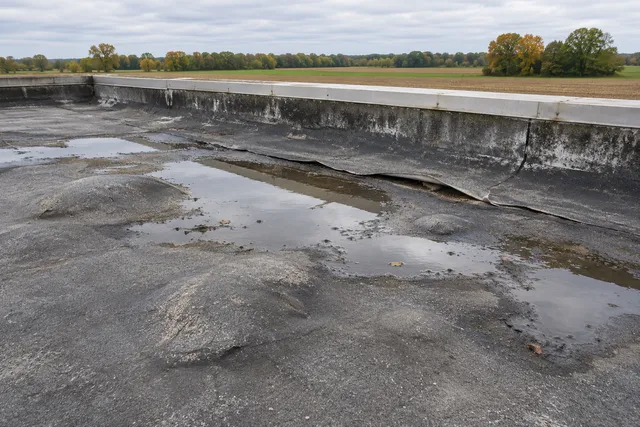
Blister clusters that point to wet insulation deeper down
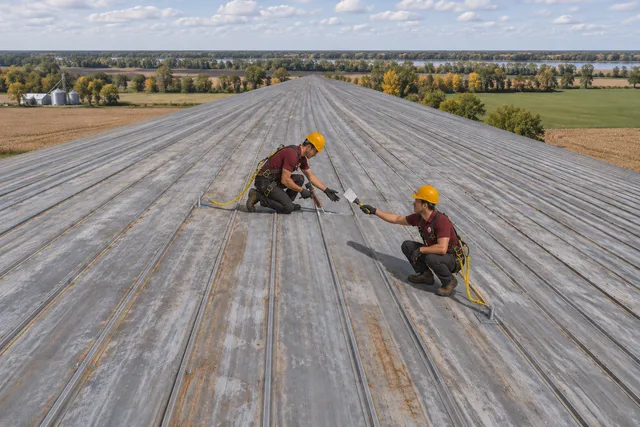
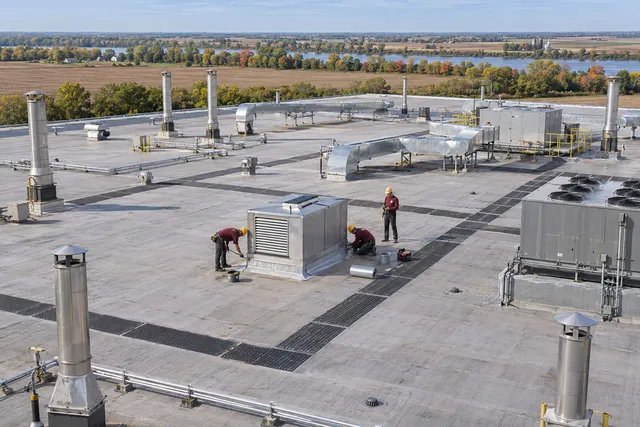
We provide commercial roof repair services in Henderson for flat membrane, metal panel, and industrial roofs, plus leak tracing on any business roof.


Our commercial roof repair services in Henderson cover four kinds of work. Each column shows the roofs it fits and the repairs it involves.

Low-slope roofs with TPO, EPDM, PVC, or modified bitumen membrane
Rewelded laps, cut-out blisters, patched punctures, reflashed drains
Blister clusters that point to wet insulation deeper down
Steel shops, sheds, and warehouses with R-panel or standing seam
New washers, oversized screws, resealed end laps, rehung gutters
Drips on cold mornings that come from condensation

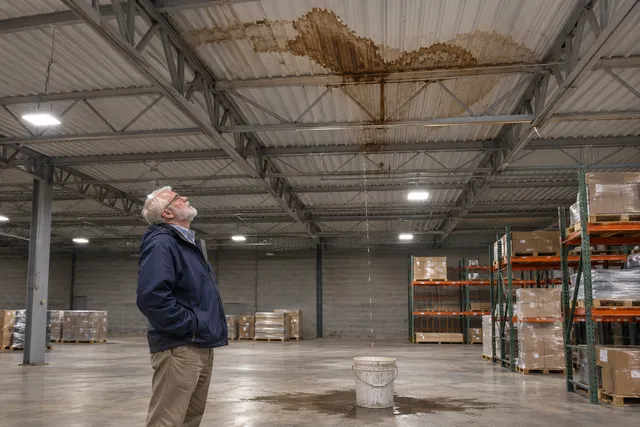
Buildings with a stain, drip, or wet tile and no obvious cause
Interior check, roof walk, moisture scan, and section water tests
Old patches covering the wrong seam

Running plants and distribution warehouses with heavy roof equipment
Exhaust-area membrane, walkway pads, deck plate, curb reflashing
Sagging deck that needs an engineer first
Each roof system fails in its own way, so each one gets its own repair method.
Heat-welded single-ply membranes that leak at seam welds, curb corners, and pipe boots. Repairs use hot-air welds and welded cover strips.
Rubber membrane held at the seams with tape. It shrinks at the edges with age and leaks at seam tape and pitch pans.
Layered asphalt sheets that blister in summer heat and open at lap edges and wall flashing. Patches use matching cap sheet.
Exposed-fastener steel panels on shops and sheds. Fastener washers, end laps, and gutters are where water gets in.
Concealed-clip panels that leak at ridge and eave closures and where pipes and vents pass through the pan.
The structural deck under most flat roofs. Long-running leaks rust it near drains and curbs, and it gets replaced in sections.
Most owners call with a stain and a guess. We sort out the roof type, the source, and the right repair on one visit.
Find the condition that matches your roof. Each one points to the service that comes first.
Membrane repair with matching material closes it, after a moisture check on the boards below.
Fasteners and laps get the work, with rust treated where the steel is still firm.
Tracing starts at the stain and works upslope to the seam, curb, or fastener above it.
Work zones, lockouts, and rated membrane near stacks keep production going below.
Repairs come first, then a coating system goes across the field to restore it.
Patching stops making sense at that point, and tear-off with a new roof is the honest call.
The same five steps run under every service, whatever the roof is made of.
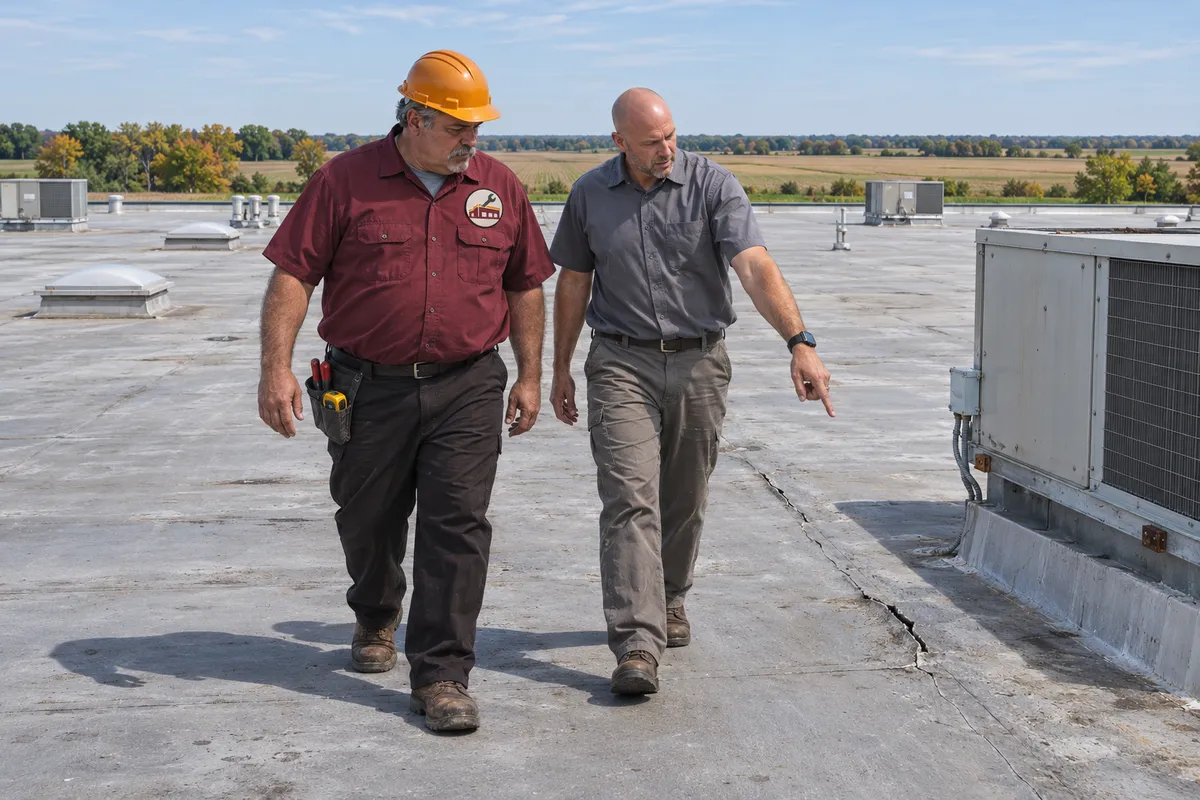
We look at the damage from inside the building, then walk the roof section by section, checking the membrane or panels, flashing, curbs, and drains.
TPO, EPDM, modified bitumen, R-panel, and standing seam each fail differently, so naming the system narrows the search before anything is cut.
Moisture readings and core cuts show whether the insulation is dry, which decides if spot repairs make sense or the roof needs more.
Welds, tape, panels, and flashing match what is already on the roof, so the repaired area moves and ages with the rest of it.
Photos of each problem and each repair stay with you, which makes the next roof inspection or insurance question faster to answer.
Repair or replace, leak sources by roof type, and how repairs are expensed.

Question about your own roof?
Call UsRepair fits damage in spots with the membrane intact elsewhere. Restoration fits a roof weathered across its surface with dry insulation: cleaning, repairs, then a coating system.
Replacement fits wet insulation, deck rust, or failures everywhere. A moisture check decides which applies, because paying for patch after patch over soaked insulation only pushes replacement down the road.
Membrane roofs leak mostly at seams and flashing, and metal roofs mostly at fasteners and laps. TPO and PVC fail at seam welds, curb corners, and pipe boots.
EPDM fails at seam tape, shrinking edges, and pitch pans. Modified bitumen blisters and opens at lap edges. R-panel leaks at washers and end laps, and standing seam at closures and penetrations.
Roof work on existing nonresidential buildings can qualify for Section 179 when it counts as an improvement, and smaller repairs are often expensed as ordinary costs.
IRS Publication 946 lists nonresidential roofs as qualifying improvements, with a 2026 limit of $2,560,000. Your CPA decides which treatment applies, and invoices that separate a seam repair from a section replacement help.
Yes. Many Henderson buildings mix a flat office wing, a metal warehouse, and an older section. Each part gets checked with the method that fits it, and the findings come back as one list split by roof section.
The roof type if you know it, where water shows up inside, when it drips, and any past repairs. Photos of stains and wet tiles help, and so does knowing how the roof is reached, whether by hatch, ladder, or lift. None of it is required to book a visit.
Tell us what kind of roof you have and where it leaks. We will match the repair to the roof.
Want A Call Back About Your Roof?
Leave a name and number and we will call to talk through the leak or damage.
Or call now: (618) 386-6062