Stain Along The Wall Line
Water shows up where the rear roof meets the front of the building.
Open Transition Flashing
The flashing where the flat roof turns up the pitched wall splits or pulls loose, and water runs behind it.

As a Providence commercial roof repair contractor, we repair buildings that pair a flat membrane roof with a pitched metal section, including the joint between them.
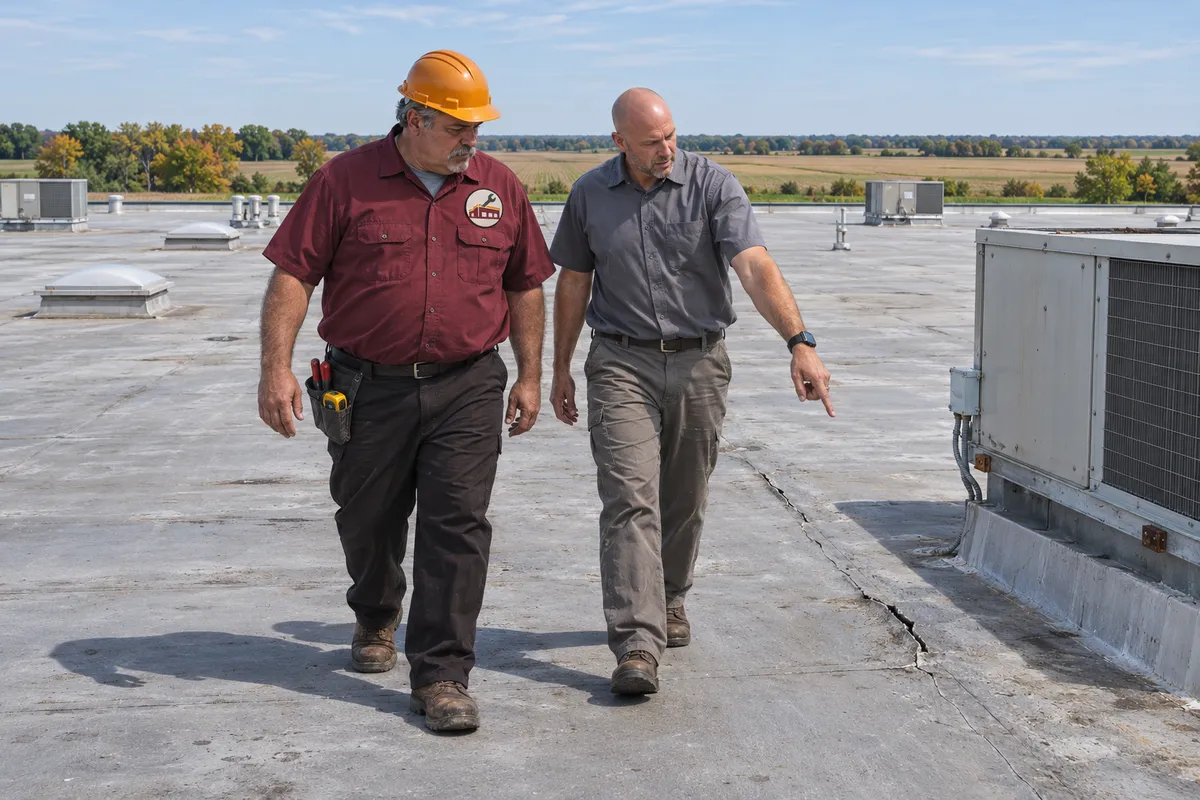
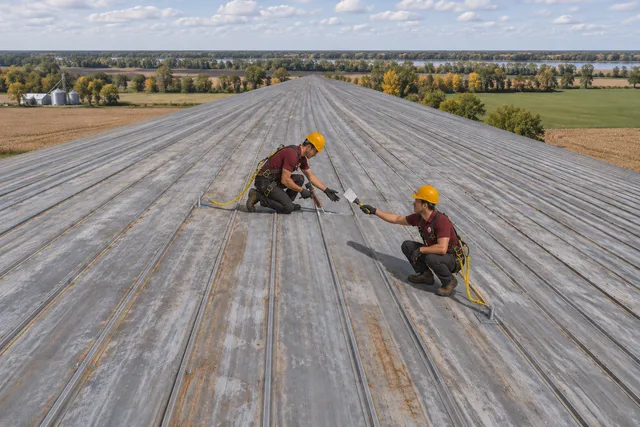
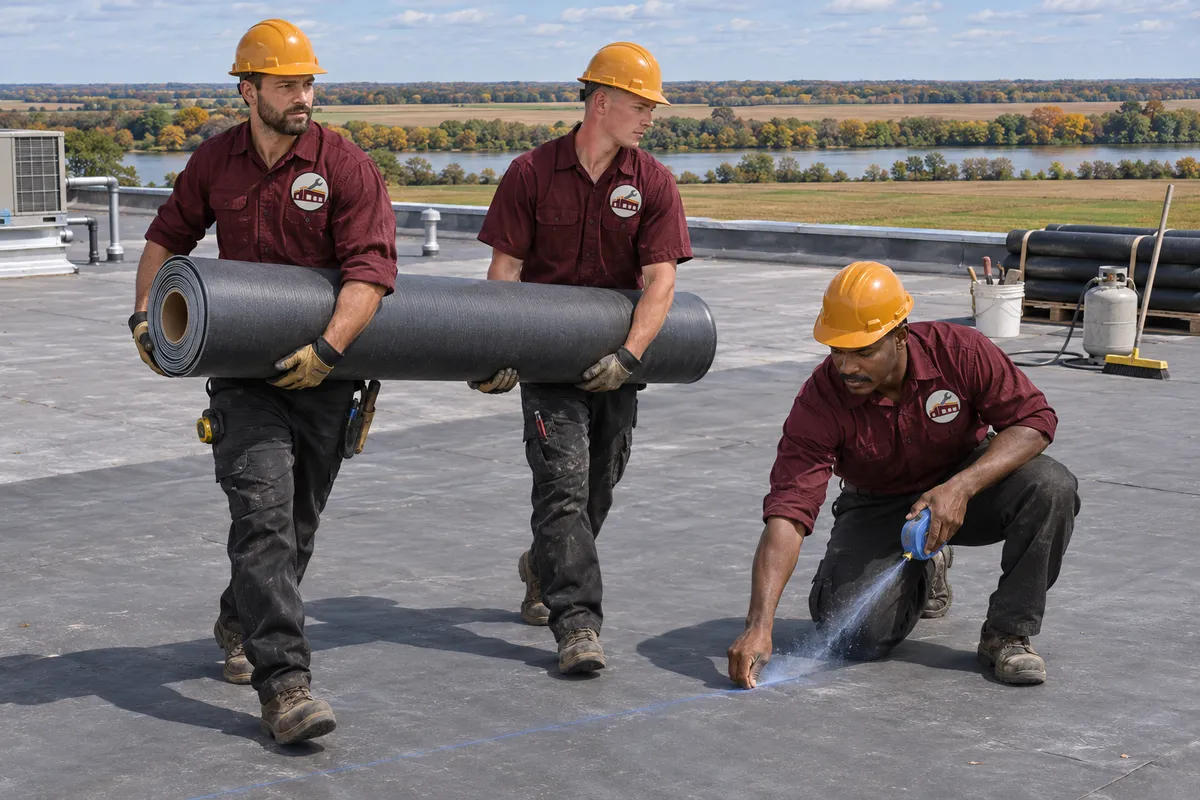
A Providence commercial roof repair contractor often finds a flat rear roof running into a pitched front wall, or a metal section beside a membrane one. Those buildings get one repair plan that splits the work by roof type, since membrane and metal need different fixes.
Providence is in Webster County, where the state building inspector covers building work and Dixon is the county seat.
Mixed roofs leak where each roof type is weakest, and at the seam between them.
Water shows up where the rear roof meets the front of the building.
The flashing where the flat roof turns up the pitched wall splits or pulls loose, and water runs behind it.
Ceiling tiles stain in the back room or storage area.
An open lap or a clogged drain on the flat roof lets water in, often near the low corner.
A drip falls in the front room during rain, often in the same spot.
Backed-out screws or a lifted ridge cap on the pitched metal let wind-driven rain through.
Repairs matched to each roof type pay off at the joint and on both sides of it.
New flashing where the two roofs meet closes the most common leak on these buildings, which is why it gets checked first.
Cleared drains and resealed laps on the rear roof stop water from ponding against the wall it runs into.
Fresh washers and refastened ridge caps on the pitched side keep wind-driven rain out of the front of the building.
Splitting the work by roof type on one plan saves a second visit and puts the joint flashing in the hands of whoever works there last.
Each mixed-roof building in Providence gets these repairs in some combination.
Flashing at the flat-to-pitched joint gets replaced and carried up under the metal or siding above it.
Open laps get rewelded or retaped, and punctures and blisters get patched with matching membrane.
Loose screws get oversized replacements and new washers, and ridge caps get refastened.
Drains at the low corner of the flat roof get cleared, and split drain flashing gets patched.
The joint between a flat rear roof and a pitched front wall is where these buildings leak most. We check it before anything else.
Each visit splits the roof into its sections and covers the joint between them first.
We check the joint where the roofs meet, then walk the seams and drains of the flat section and the fastener rows and ridge of the metal one.
Membrane repairs and metal repairs get listed separately, since each needs its own materials, tools, and order of work.
New flashing goes in at the joint and tucks under the metal or siding above, so water running down the pitch stays on top of it.
Flat seams are welded or taped, drains cleared, and metal fasteners and ridge caps replaced, with the joint checked once more at the end.
Have a building in another town? Call us or send us a message. We repair commercial roofs in Providence and the thirteen towns below.
Edge metal, decks, and rooftop units after severe weather.
Curb corners, pitch pans, and storefront roofs with mixed sections.
Fasteners, panel laps, ridge caps, and eave trim on steel buildings.
Mixed roofs, permits, wall-line leaks, and the buildings that have them.
Question about your own roof?
Call UsWith one repair plan that splits the work by roof type. The flat membrane gets seam repair, patches, and drain work. The pitched metal gets fasteners, laps, and ridge caps. The transition gets new flashing where the two roofs meet, and since that joint is a common leak point, it gets checked first.
Providence is in Webster County, where the state building inspector covers building work and Dixon is the county seat. Seam patches and fastener swaps are maintenance in most cases. Deck replacement or framing work is the kind of job that brings in the state inspector.
Water running down the pitched front section lands right at the joint, and the flat roof behind it holds water against the wall. If the flashing there splits or was never tucked under the siding, water gets behind it. New transition flashing carried up under the metal fixes it.
Yes, when the leak is on the flat side. Seams, punctures, and drains on the membrane get fixed on their own. The joint between the two roofs gets checked anyway, since a leak near the wall often starts at the transition instead of the field.
Storefronts with a pitched front and a flat rear addition, shops with a metal main roof and a flat office wing, and older buildings that grew in stages. Each section was built at a different time, so the repair plan looks at the age and type of each one.
Often. An older section might carry modified bitumen on the rear roof and aged metal on the front, while a newer addition has TPO. Each section gets matching repair material, so a patch on the old roof ages along with it, and the flashing between sections is rebuilt where they meet.
Tell us which section leaks and where the roofs meet. We will check the joint first and plan both sides.
Want A Call Back About Your Roof?
Leave a name and number and we will call to talk through the leak or damage.
Or call now: (618) 386-6062