If Your Roof
Is soft and sticky near exhaust fans
Oil, grease, or chemical discharge has softened the membrane, which gets cut out and replaced with one rated for it.
Start WithExhaust Damage Repair

As a Henderson industrial roof repair contractor, we repair plant and warehouse roofs while production keeps running below.
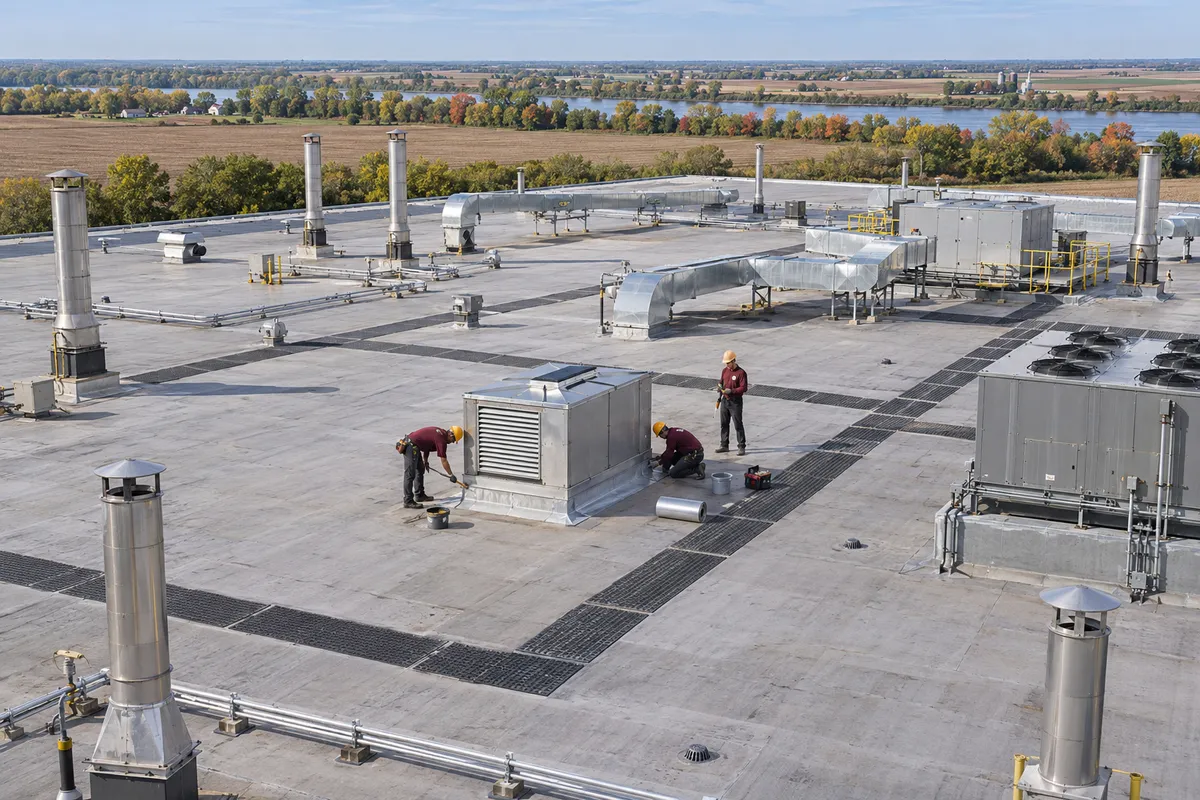
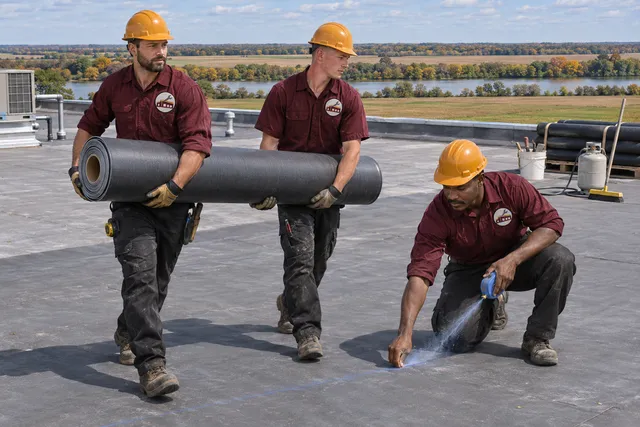
A Henderson industrial roof repair contractor plans around production first. These cases show where plant roof work starts.
Oil, grease, or chemical discharge has softened the membrane, which gets cut out and replaced with one rated for it.
Crushed boards and scuffed membrane along service routes get replaced, then walkway pads go down.
Plastic sheeting and catch basins go up inside while a temporary seal goes on above.
A sagging deck is a structural question, so an engineer reviews it before new deck plate goes in.
Plant roofs carry damage that office roofs rarely see. Each pair ties what shows up on the floor to its cause above.
Dark residue builds up in floor drains and gutters downstream of the stacks.
Discharge softens, swells, or cracks the membrane around each fan, and the curb flashing splits.
Water lands on equipment or product during rain, and staff mark the spot on the floor.
Marked drip points line up with curbs, drains, and seams on the roof once the crew measures across.
A section of deck dips between joists near an old drain or curb.
Years of leaking rust the deck plate until it goes soft, which core cuts confirm.
New drips appear after other trades service rooftop equipment.
Boots crush insulation and wear the membrane along routes from hatches to units.
Plant roof repairs follow the damage the building produces. These are the ones we make most on plants and warehouses.
| Repair | What It Fixes | When It Fits |
|---|---|---|
| Exhaust Area Repair | Damaged membrane cut out and replaced with a rated sheet, plus a catch tray or sacrificial layer | Soft, sticky, or swollen membrane near stacks |
| Traffic Route Repair | Crushed insulation replaced, membrane patched, walkway pads laid, routes marked | Paths from hatches to rooftop equipment |
| Steel Deck Repair | Rusted deck cut back to solid steel, new deck plate fastened across joists, roof rebuilt | Soft spots and sagging near long-running leaks |
| Curb And Fan Reflashing | Cracked curb flashing replaced while units are locked out with plant maintenance | Leaks at exhaust fans and rooftop units |
| Production Line Leak Response | Temporary seal above, protection below, permanent patch after the trace | Water over equipment, stock, or product |
Plant roof repairs pay off at the parts of the roof that production works hardest.
Replacing softened membrane with a sheet rated for the exhaust keeps the area around each stack from cracking open again.
Walkway pads and marked routes take the boot traffic off the membrane, so the next contractor visit leaves fewer holes behind.
New deck plate over solid supports replaces rusted sections, so the roof above it has a firm base again.
Lockouts are planned with plant maintenance, so curb and fan repairs happen while those units are already shut down.
Protect the line first with sheeting and catch basins, then call. We seal the roof above and trace the source.
Plant visits start with the safety plan, then follow the same inspection order as any roof.
We walk the roof with plant maintenance, mark intakes and stacks, and check membrane, curbs, drains, and deck near old leaks.
Zones go above idle areas, low-odor materials are chosen near intakes, and hot work on the membrane runs under a permit with a fire watch.
Rooftop units and fans in the work area are shut down with plant maintenance before any curb or flashing work starts.
Damaged membrane, crushed insulation, and rusted deck come out, and matching material goes back in over a solid base.
Units come back on with maintenance, walkway routes get marked, and photos of each repair go into the roof file for the plant.
Plant roofs often combine membrane and metal sections. These repairs come up on the same visits.
Low-slope sections over offices and production floors need seam welds and drain repairs between plant visits.
Flat roof repairWarehouse additions with panel roofs bring fastener and end lap work into the same job.
Metal roof repairTracing finds the curb or seam above a drip mark before more product gets wet.
Leak tracingRunning plants, exhaust, foot traffic, decks, production leaks, and storm records.
Question about your own roof?
Call UsIn most cases, yes. Work zones are set above idle areas, low-odor materials are used near air intakes with timed intake shutdowns, and hot work runs under a permit with a fire watch.
Plant safety rules, badges, and sign-in apply to every crew member, and curb and fan repairs are timed with maintenance so units come back online as soon as the curb work ends.
Exhaust deposits oil, grease, chemicals, or heat on the membrane, which softens, swells, or cracks it near each stack. Signs include sticky membrane, discolored patches, cracked flashing on the fan curb, and heavy residue in drains downstream.
The repair cuts out the damaged membrane and replaces it with one rated for that discharge, plus a catch tray or sacrificial layer where buildup continues.
Service routes get crushed insulation, worn membrane, and punctures. The work replaces crushed boards under soft spots, patches worn or punctured membrane, installs walkway pads on the main routes, and marks paths from hatches to equipment.
Other trades walk plant roofs often, so a short briefing on walkway use keeps the same repairs from coming back each season.
Rusted decks show up as soft spots, sagging, and wet core cuts near long-running leaks.
The membrane and insulation come off over the damage, the deck is cut back to solid steel, and new deck plate is fastened across the joists before the roof is rebuilt. A structural engineer reviews any sagging deck, and deck replacement brings in the permit office.
Protection comes first: a temporary seal on the roof, and plastic sheeting and catch basins inside. Then the leak is traced with a water test and moisture scan while staff watch for new drips.
Drip locations marked on the floor help the crew line them up with curbs, drains, and seams above. The permanent patch or reflashed curb follows.
With dated photos, measurements, and notes on each damaged roof part, taken before permanent repairs cover the evidence.
Get wide shots of each roof section, close-ups of punctures, hail bruises, bent edge metal, and lifted panels, and interior photos of stains. Note any temporary repairs and their dates. Coverage decisions belong to your insurance carrier and adjuster.
Tell us what the plant makes and where the roof leaks. We will plan the repair around your production.
Want A Call Back About Your Roof?
Leave a name and number and we will call to talk through the leak or damage.
Or call now: (618) 386-6062