If Your Roof
Drips under a rooftop unit during rain
Open curb corners, split base flashing, or a failed unit gasket let water in beside the unit.
Start WithCurb Leak Repair

As a Henderson commercial roof leak repair contractor, we trace water from the stain inside to the opening on the roof and fix it.
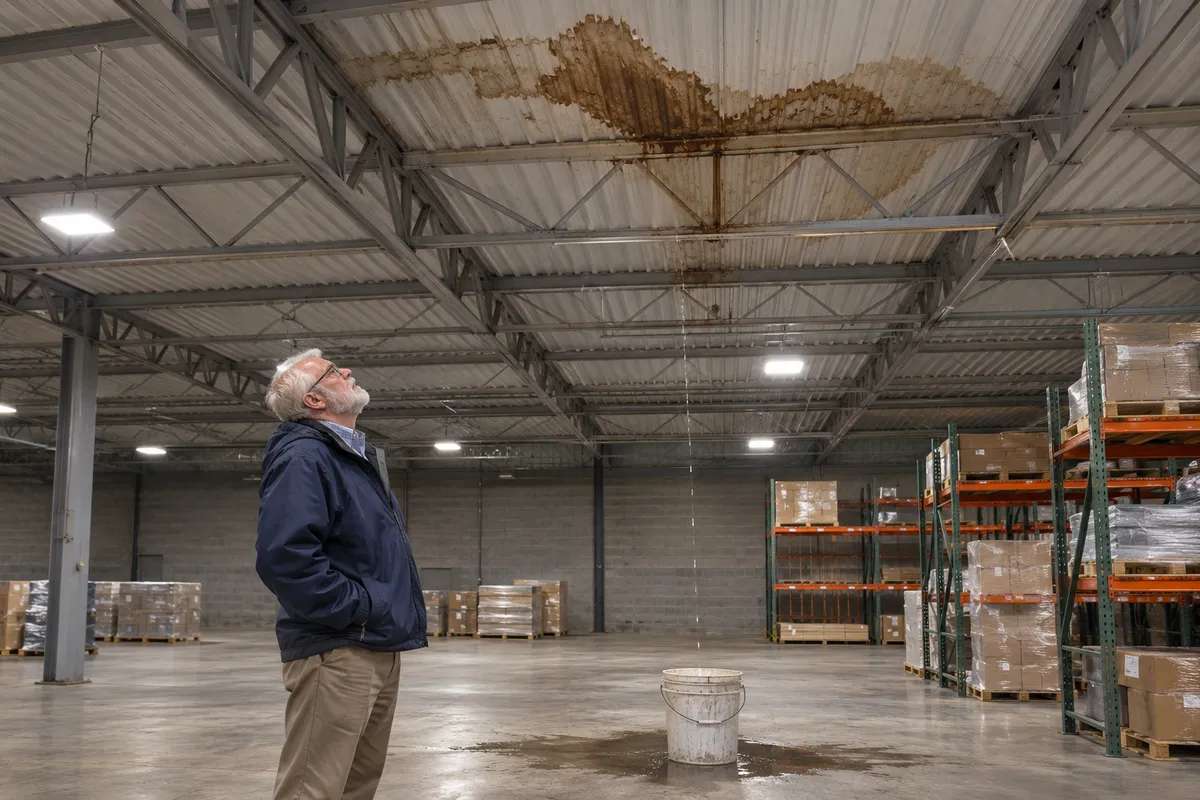
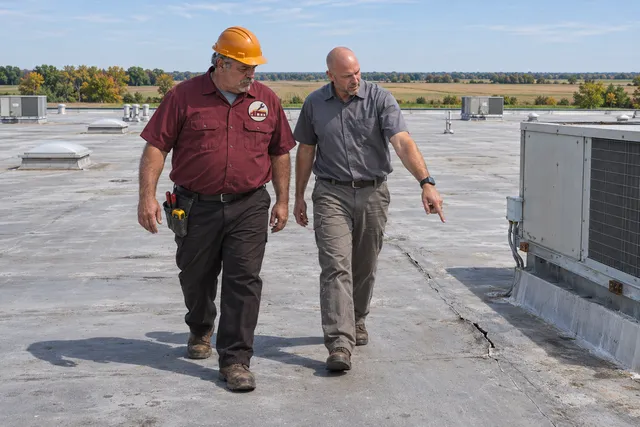
A Henderson commercial roof leak repair contractor sorts leaks by where the water shows up. These cases point to the first place to look.
Open curb corners, split base flashing, or a failed unit gasket let water in beside the unit.
Pitch pan filler shrinks away from the pipe, and water runs down the support.
Coping joints, the termination bar, and the brick itself can all let water into the wall.
Water that shows up without rain is condensation, which calls for insulation work inside the building.
Where water shows up inside narrows the search on the roof. Water travels along deck flutes and purlins, so the source sits upslope.
A ring forms on ceiling tiles near the supply ducts for the unit above.
Open curb corners, flashing pulled from the curb base, or a condensate line draining onto the roof.
Paint bubbles or water streaks show on the inside face of an outside wall.
Open coping joints, a loose termination bar, or cracked brick let water into the wall above the roof.
Water drips at the edge of the opening during heavy rain.
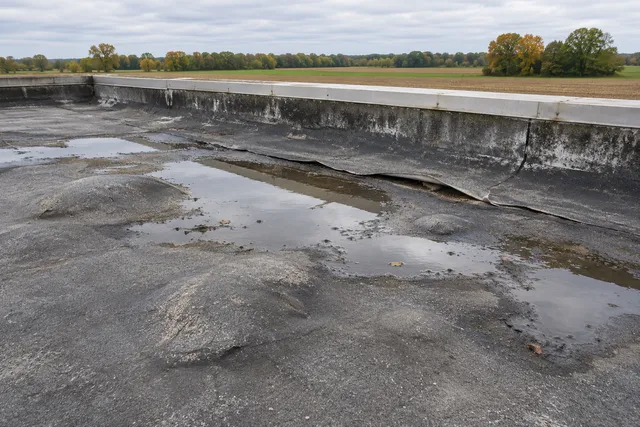
Ponding next to a low curb tops its flashing, and worn hatch gaskets let water past the lid.
Drops run down a pipe, conduit, or equipment support into the room.
The sealer in the pan shrinks below the rim and pulls away, and water runs down the support.
Leak repairs follow where the water got in. These are the sources we fix most once the trace is done.
| Repair | What It Fixes | When It Fits |
|---|---|---|
| Curb Reflashing | Preformed corner patches, reflashed curb bases, resealed unit joints with the HVAC crew | Leaks beside rooftop units and fans |
| Pitch Pan Repair | Refilled sealer, rain bonnets, rusted pans replaced, pans swapped for curbs or boots | Leaks at odd-shaped pipes and supports |
| Parapet And Wall Flashing | Resealed coping joints, refastened termination bar, reset counterflashing | Water entering through the wall above the roof |
| Skylight And Hatch Repair | Resealed curb flashing, new domes, new hatch gaskets, raised short curbs | Drips at openings during heavy rain |
| Temporary Seal, Then Permanent Repair | Tape or cement during a storm, then matching membrane or flashing once dry | Active leaks in cold or wet weather |
Fixing the real opening keeps the same stain from coming back. Each benefit shows up at the part of the roof that was leaking.
A reflashed curb corner ends the drip over the room the unit serves, and the stained ceiling tiles below can finally be replaced.
Resealed coping and reset counterflashing keep water out of the brick, so paint and drywall on the inside face stop failing.
Tracing first means the patch goes on the actual opening, which beats patching three seams near the stain and missing the source upslope.
Photos and a marked sketch of each leak source make the next inspection faster and show what changed since the last storm.
A leak that returns usually means the patch went on the wrong seam. We trace it from the stain before anything gets sealed.
Leak tracing follows a set order, so one source stays out from behind another.
We start at the stain inside, check the deck and insulation above it, then go to the roof and work upslope from that point.
A moisture meter or infrared scan shows how far water has spread and which seams, curbs, or fasteners line up with it.
Controlled water goes on one section at a time while someone watches inside, so the real source shows up on its own.
When water is still entering, tape or roof cement goes on the suspected spot, and plastic sheeting protects stock and equipment below.
Once the source is confirmed and dry, matching membrane, flashing, or a new pitch pan goes on, and the temporary material comes off.
A traced leak often leads to one of these repairs, each with its own page.
Most curb and seam leaks on low-slope buildings end in a membrane patch or a rewelded lap.
Flat roof repairLeaks traced to raised screws or end laps on panel roofs lead straight to fastener and lap work.
Metal roof repairProduction lines under a leak need protection inside first and a repair timed around the plant schedule.
Industrial repairTracing, curbs, pitch pans, parapets, skylights, and temporary patches.
Question about your own roof?
Call UsStart at the interior stain, then move to the roof and search upslope for seams, flashing, curbs, or fasteners that line up with it.
A moisture meter or infrared scan shows wet areas, and a controlled water test runs one section at a time. Water travels along deck flutes and purlins, so the drip can sit several feet from the opening.
Curbs leak at open corners, at split flashing along the base, and at the joint where the unit sits on the curb.
Corners get preformed patches, pulled-away base flashing gets reflashed, and a failed unit gasket gets resealed with the HVAC crew. A condensate line draining onto the roof gets rerouted to a drain. Some leaks come through the unit cabinet itself.
A pitch pan is a metal box around an odd-shaped penetration, filled with sealer. As the filler shrinks, it pulls away from the pipe or support and sinks below the rim, and water runs down into the building.
Fixes include refilling with pourable sealer, adding a rain bonnet, replacing a rusted pan, or swapping the pan for a curb or boot.
By resealing or replacing the wall flashing, termination bar, and coping. Coping joints get resealed or new joint covers, the termination bar is refastened, counterflashing is reset, and base flashing is patched or replaced.
Brick parapets soak up water, so masonry cracks need tuckpointing too. A water test on the wall alone shows whether the brick or the flashing lets water in.
Yes, at curb flashing, cracked glazing, and worn gaskets. Their curbs sit low, so water tops the flashing in heavy rain.
Curb flashing is resealed or replaced, cracked domes are swapped, hatch gaskets get new seals, and short curbs can be raised during larger repairs. Clearing the nearest drain is part of the fix, since ponding next to a short curb overflows it first.
A temporary patch only stops water for now. Roof cement, tape, or a tarp goes on during a storm or cold snap, often over a wet surface.
The permanent repair comes once the roof dries: matching membrane, flashing, or panels on a cleaned and primed surface. Cement smeared over a TPO seam has to come off before a proper weld can hold.
Tell us where the stain is and when it drips. We will trace it to the opening and fix that spot.
Want A Call Back About Your Roof?
Leave a name and number and we will call to talk through the leak or damage.
Or call now: (618) 386-6062