If Your Roof
Has one split seam or a torn flashing corner
Cleaning and a hot-air weld or primed tape close the lap, and the rest of the field stays as it is.
Start WithSeam Repair

Call a Henderson flat roof repair contractor for TPO, EPDM, PVC, and modified bitumen roofs with open seams, blisters, punctures, or ponding.
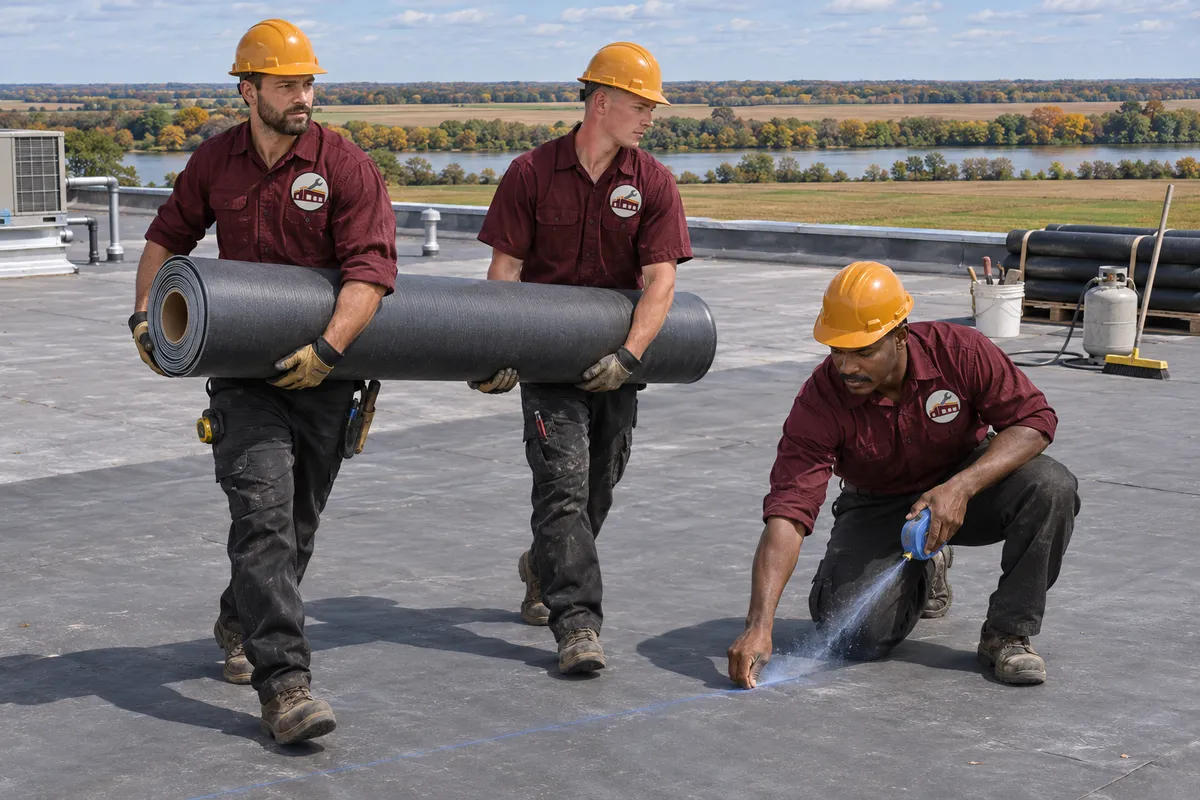
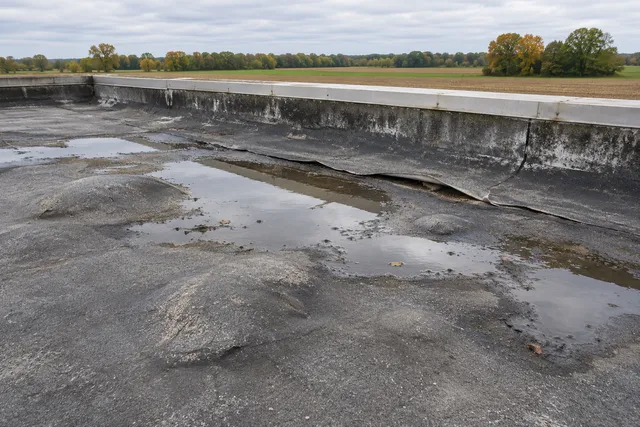
A Henderson flat roof repair contractor starts with the membrane type and how wet the boards are. These four cases show where a flat roof job begins.
Cleaning and a hot-air weld or primed tape close the lap, and the rest of the field stays as it is.
Clearing the outlets comes first, then crickets or tapered insulation can correct the low bay.
Large or broken blisters get cut out, dried, and patched, and small stable ones get marked and watched.
Wet insulation across the field means patching would chase leaks, so core cuts decide the next step.
Flat roofs show trouble inside first. Each pair links what you see in the building to the part of the membrane that let water in.
A ring spreads on the ceiling under a unit or exhaust fan after rain.
Flashing at the curb corner opens up, and water runs under the membrane toward the drip point.
Tiles bow and turn soft along one bay of the building.
A TPO weld or EPDM seam tape lets go, and water spreads through the insulation before it shows.
New drips show up a week after the HVAC contractor was on the roof.
A dropped screw or tool, stepped on, pushes through thin or aged membrane along the service path.
Water runs down the inside of an exterior wall near a downspout.
Leaves and a crushed strainer stop the outlet, and backed-up water finds the drain flashing.
These are the flat roof repairs we make most, from a single lap to a low bay that holds water.
| Repair | What It Fixes | When It Fits |
|---|---|---|
| Seam Weld Or Tape | TPO laps rewelded, EPDM laps primed and taped, cover strips on aged seams | One or a few open laps with dry boards underneath |
| Blister Cut And Patch | Loose membrane cut away, area dried, matching patch lapped past the cut | Large or broken blisters on modified bitumen and built-up roofs |
| Puncture Patch | Matching membrane patch over the hole after the board below is checked | Holes along service routes and hail marks on thin membrane |
| Drain And Scupper Repair | New strainers, retightened clamping rings, patched drain flashing, reflashed scupper boxes | Outlets that back up or leak at the bowl |
| Ponding Correction | Lowered drain sumps, crickets at rooftop units, tapered insulation in a low bay | Water that stays on the roof after storms |
Flat roof repairs pay off where water collects. Each row names the spot where you see the result.
Rewelded TPO laps and retaped EPDM seams close the gaps water uses to reach the insulation, so the field around them keeps working as one sheet.
Catching a puncture before it soaks the board keeps the roof firm underfoot, and a dry board under a patch is a board that stays in place.
Strainers, clamping rings, and cleared scuppers get water to the outlets, which takes weight off the deck and slows membrane wear in low bays.
Walkway pads along the routes HVAC crews use put a wear layer between boots, dropped screws, and the membrane.
Ponding that stays after a storm finds weak seams and adds weight to the deck. We clear the outlets and find the low spot.
Each flat roof visit follows the same order, so wet boards are found before any patch goes on.
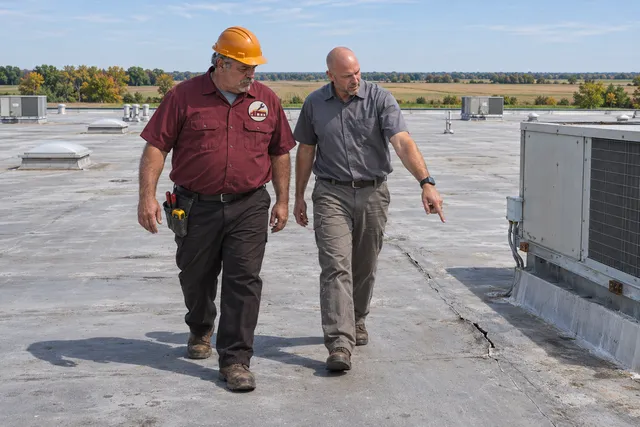
We walk the field and the edges, probe seams with a seam tool, and take moisture readings around every stain location and soft spot.
Blisters get cut, punctures get checked, and a core cut shows whether the insulation under a damaged area is wet.
Soaked insulation comes out and new board goes in, so the patch sits on a dry, firm base and the leak stays gone instead of returning as a soft spot.
TPO and PVC get hot-air welds, EPDM gets primer and seam tape, and modified bitumen gets a matching cap sheet patch.
Drains and scuppers get cleared, missing strainers get replaced, and every new weld gets probed before the crew comes down.
Flat roofs often share a building with other problems. These repairs pair with the membrane work.
Many shops have a flat office wing beside a metal warehouse roof, so both roofs get checked on one visit.
Metal roof repairLeak tracing finds the right seam when water travels along the deck flutes before it drips.
Leak tracingPlant roofs add exhaust residue and heavy foot traffic to the usual seam and drain work.
Industrial repairBlisters, ponding, seams, punctures, and drains on low-slope roofs.
Question about your own roof?
Call UsTrapped moisture or air expands under the membrane on hot days and lifts a bubble between the plies. Small blisters that stay put get marked and watched.
Large or broken ones are cut out, the area is dried, any wet insulation is replaced, and a matching patch goes over the cut. A cluster of blisters points to deeper moisture, so core cuts come before more patching.
Getting water to the outlets faster. The first step is clearing debris from drains, strainers, and scuppers.
If water still sits in a low bay, the fixes grow from lowering a raised drain sump, to adding crickets around rooftop units, to tapered insulation or a new overflow scupper. A sagging deck under the pond needs an engineer before any roofing work.
TPO seams are cleaned with membrane cleaner and rewelded with hot air, and a welded cover strip goes over laps that have aged. EPDM seams are cleaned, primed, and resealed with seam tape and a cover strip.
When years of sun leave old TPO that refuses a test weld, a cover strip or patch takes the place of rewelding the original lap.
Clean around the hole, check the board underneath for water, and cover the damage with matching membrane that laps past it on every side.
Punctures on Henderson roofs come from dropped tools and screws during HVAC service, hail on thin membrane, and boots grinding debris into the sheet. Walkway pads on service routes cut down on new holes.
Clearing comes first, then a look at the strainer, the clamping ring, and the flashing at the bowl, since backed-up water finds every weak spot around an outlet.
Crushed or missing strainers get replaced, loose clamping bolts get retightened, split drain flashing gets patched, and rusted scupper boxes get reflashed or swapped. Fall leaves are the main reason outlets clog here.
Send the roof type and where the water shows up inside. We will check the seams, boards, and drains first.
Want A Call Back About Your Roof?
Leave a name and number and we will call to talk through the leak or damage.
Or call now: (618) 386-6062