If Your Roof
Has raised screw heads with rust rings
New sealing washers go on, and oversized screws go in wherever the holes have stripped.
Start WithFastener Replacement

As a Henderson commercial metal roof repair contractor, we repair and maintain R-panel and standing seam roofs on shops, warehouses, and sheds.
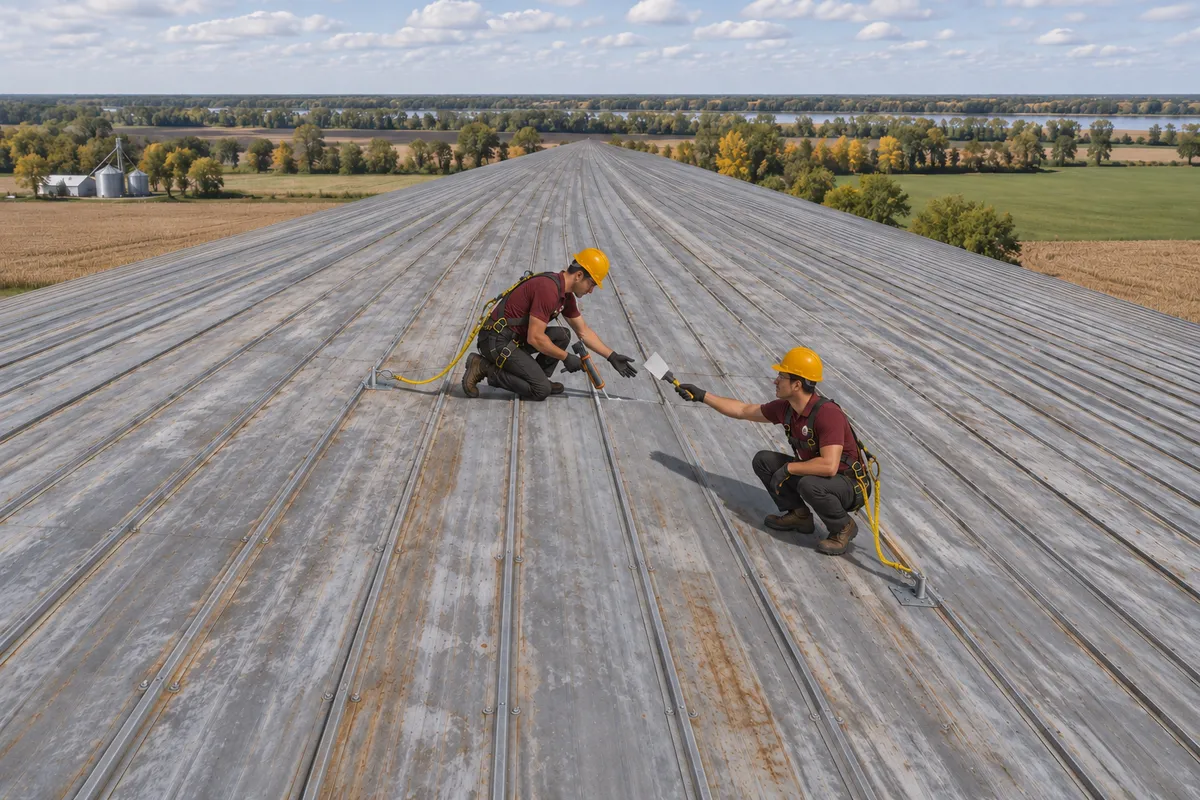
A Henderson commercial metal roof repair contractor looks at the steel itself before anything else. These cases show where the work starts on a panel roof.
New sealing washers go on, and oversized screws go in wherever the holes have stripped.
Wire brushing, primer, and sealant stop surface rust before it holes the panel.
Fresh butyl tape and new stitch screws close the joint that water backs into.
Thinned metal no longer holds a fastener, so those sections get replaced with panels that match the rib.
Metal roofs leak at a short list of places. Match what you see inside to the spot on the panels above it.
Beads of water form under the panels and fall in a spread-out pattern that stops as the roof warms.
Damp air meets cold steel. Torn insulation facing or a missing vapor retarder makes it worse, and the fix is inside.
Water falls at the same place every time it rains, often over an office ceiling.
Heat and cold work the screw loose until its washer stops sealing, and water follows the shank.
Streaks run down the inside of an eave wall during heavy rain.
Snow sliding off long panel runs bends the gutter outward, and missing foam closures let wind push rain in.
Daylight panels look yellow and drip along their edges.
Brittle translucent panels crack under hail, and the laps around them open up.
Metal repairs range from one row of screws to a rusted panel run. Each one keeps the rib profile and laps intact.
| Repair | What It Fixes | When It Fits |
|---|---|---|
| Fastener Replacement | Loose screws pulled, oversized screws in stripped holes, new sealing washers | Raised heads, rust rings, drips under fastener rows |
| End Lap Reseal | Laps cleaned and resealed with butyl tape, stitch screws replaced | Leaks at panel ends on low-pitch roofs |
| Rust Repair Or Panel Section | Surface rust brushed, primed, and sealed; holed steel cut out and replaced | Rust at laps, fasteners, and gutter bottoms |
| Gutter And Trim Repair | Gutters rehung with added hangers, ridge caps refastened, new closures | Wind or snow damage at eaves and ridges |
| Skylight Panel Replacement | Cracked or yellowed panels swapped for matching translucent panels | Hail cracks, leaking side laps, low light |
Metal roof repairs show up at the parts water touches most. Each row names where you see the result.
New washers and oversized screws seal the holes that panel movement wore open, so drips over offices and stock stop at the source.
Priming surface rust at the laps holds off perforation, so a panel stays in service instead of turning into a cut-out and replacement.
Rehung gutters with extra hangers keep runoff from spilling down the eave wall and pooling along the base of the building.
Matching translucent panels replace yellowed ones, closing cracked laps and letting more light into the shop below.
A raised screw head over an office ceiling can drip for months before the stain shows. We test every purlin line by hand.
The visit covers every fastener row and lap, since one loose screw can hide among thousands.
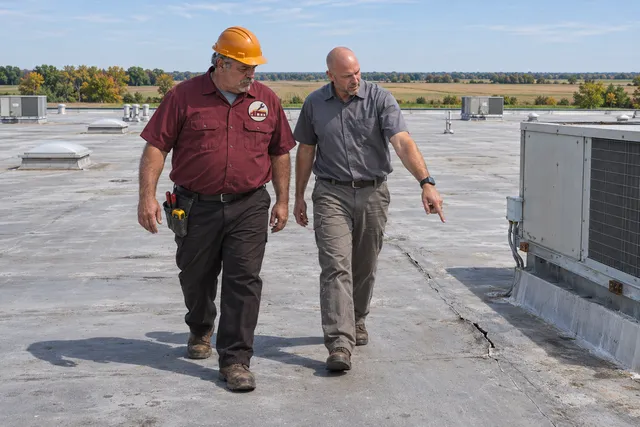
We walk each purlin line, test screws by hand, and look at laps, gutters, and skylights for rust, gaps, and cracks.
A drip that follows rain gets traced to its fastener or lap. Drips on cold, dry mornings point to insulation work inside the building.
Loose screws come out, stripped holes get oversized screws, and every new fastener gets a fresh sealing washer.
End laps get cleaned and new butyl tape, surface rust gets brushed and primed, and holed sections get replacement panels with the same rib.
Gutters get rehung, ridge caps and closures get refastened, and cracked skylight panels get swapped with sealed laps.
Metal buildings often have more than one roof problem. These repairs come up on the same visits.
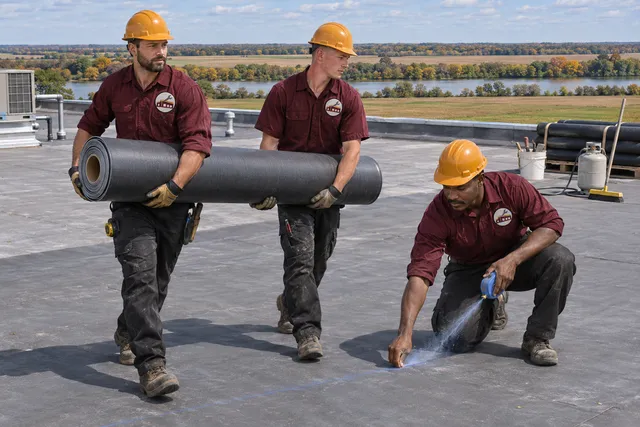
Office wings and additions on metal buildings often carry a flat membrane roof with its own seams and drains.
Flat roof repairWater running along purlins can drip far from the loose screw, so tracing finds the real opening.
Leak tracingPlant buildings with metal roofs add exhaust fans and heavy service traffic to the fastener work.
Industrial repairScrews, rust, laps, gutters, skylights, and cold-morning drips.
Question about your own roof?
Call UsPanels grow in summer heat and shrink in cold, and over many cycles that movement works each screw loose until its washer stops sealing.
The repair is a walk of every purlin line, a hand test on each screw, oversized screws in stripped holes, and new sealing washers. Raised heads with rust rings are the sign to look for.
Rust on the surface over firm steel gets wire brushed, primed, and sealed. Flaking scale rust gets ground down, primed, and patched.
Once rust has holed or thinned the metal, that section of panel is replaced with one that matches the rib profile so the side laps close tight. Rust starts at laps, fasteners, and gutter bottoms.
The sealant tape between overlapping panel ends dries out, or the stitch screws loosen, and wind-driven rain pushes uphill into the joint.
Cleaning the lap and resealing it with butyl tape, replacing stitch screws, and adding a strip over badly rusted laps fixes it. Low-pitch roofs leak here more often because water moves slowly and backs up at each joint.
Bent pieces get refastened or replaced, joints get resealed, and foam closures get swapped. Gutters pulled from the eave are rehung with more hangers, lifted ridge caps are refastened with new closures, and loose rake trim is replaced.
Snow sheeting off long panel runs bends gutters outward, so snow guards help above walkways and loading docks.
Cracked skylight panels are replaced with matching translucent panels, since patches on brittle, yellowed plastic seldom hold.
The new panel matches the rib profile, both side laps and end laps are sealed, and it is fastened through the high ribs with new washers. On older buildings with several failing panels, replacing them together lets in more light.
Condensation. Damp air from the Ohio River valley meets cold panels and beads up on their undersides, then stops as the steel warms. Torn insulation facing and a missing vapor retarder make it worse.
A drip that follows rain and sits under one lap or fastener is a leak, while a spread-out drip on clear, cold mornings needs insulation work inside.
Tell us the panel type and where it drips. We will test the screws, laps, and gutters first.
Want A Call Back About Your Roof?
Leave a name and number and we will call to talk through the leak or damage.
Or call now: (618) 386-6062